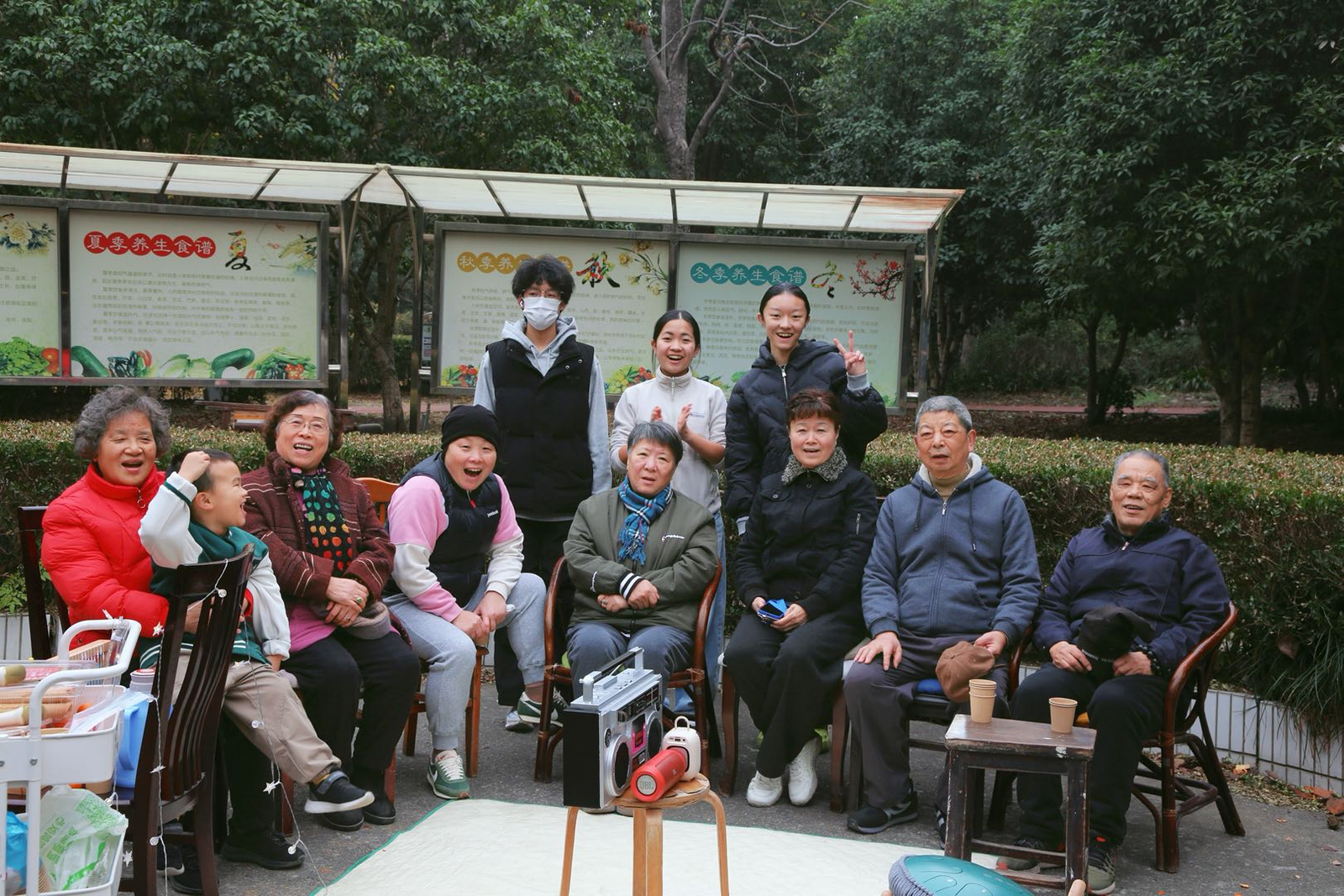
Elderly Music Reminiscence Volunteer Team
Situation
Phase 1: Quantitative Screening (GDS)
- I began by conducting a mental health screening at a local community senior centre using the Geriatric Depression Scale (GDS). I successfully collected 20 valid responses. The data revealed that lonelinesswas the dominant issue, strongly correlating with low mood and social withdrawal.

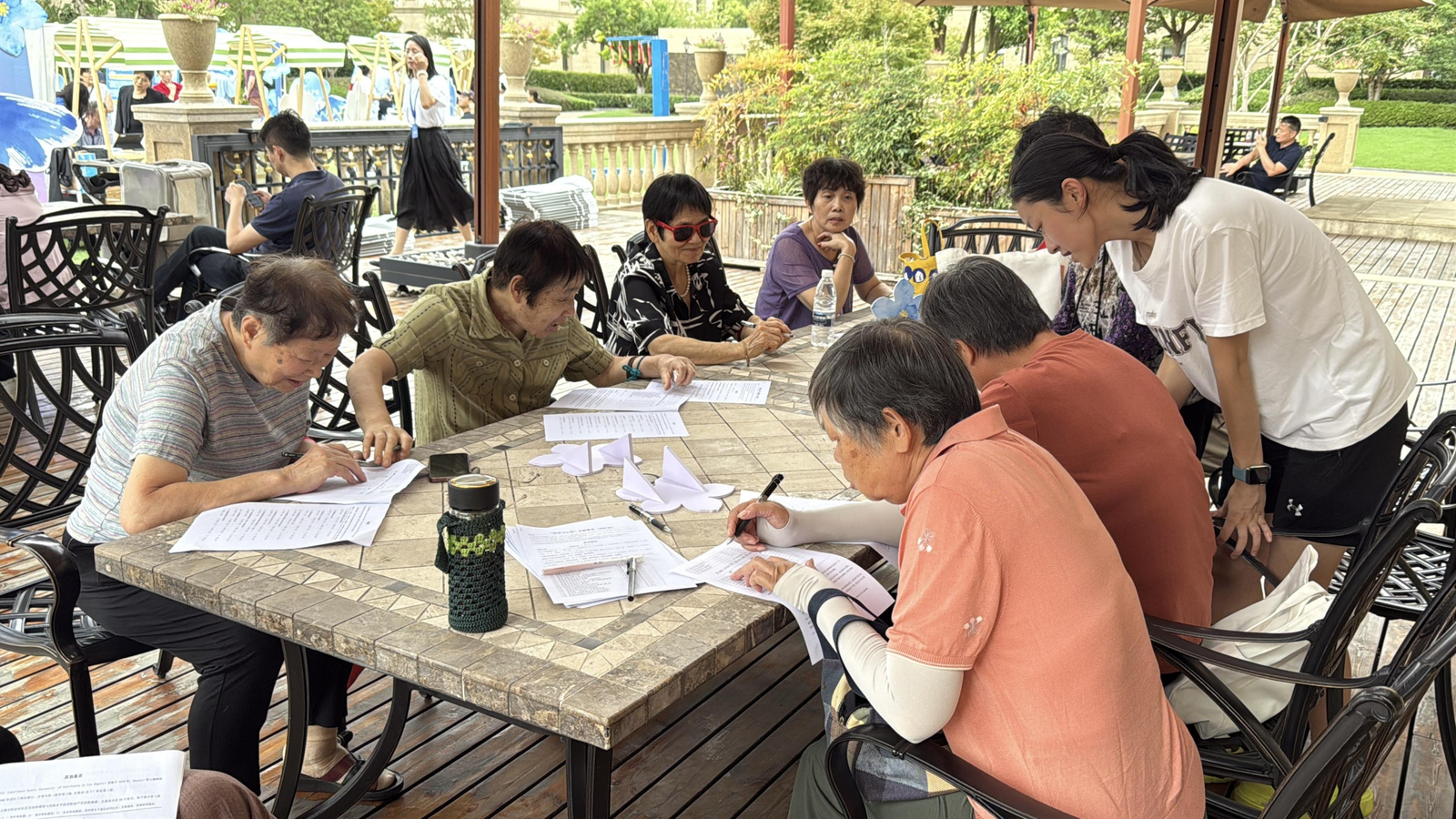
Phase 2: Qualitative Interviews (One-on-One Conversations)
- To dig deeper, I conducted in-depth interviews with 5 seniors from the same centre. These interviews uncovered a “Dual Dilemma” (Emotional & Physical), which the GDS alone could not capture.
| Senior Profile | Age & Living Status | Music Preference | Physical/Emotional Pain Point |
|---|---|---|---|
| Teacher | 72, Lives alone | Peking Opera, Revolutionary Songs | Physical: Difficulty climbing stairs. |
| Worker | 78, Not alone | Shanghai Opera, Nostalgic Golden Oldies | Physical: Cannot handle complex operations (smartphones). |
| Nurse | 68, Lives alone | Yue Opera, Suzhou Folk Songs | Emotional: Lacks companionship from children. |
| Engineer | 82, Not alone | Military Songs, Instrumental Music | Physical: Limited physical stamina. |
| Sales Clerk | 75, Lives alone | 1980s Pop Music | Emotional: Has very few social activities. |
Phase 3: Analysis of Existing Solutions
We also reviewed current support systems:
- Medication: Targets moderate/severe cases; seniors fear side effects and stigma.
- Counseling: Too expensive, inaccessible, and feels too heavy.
- General Community Activities: Lack continuity and fail to cover housebound or mobility-impaired individuals.
Conclusion:
- Existing solutions are not daily, not engaging, and hard to sustain. The real long-term needs of seniors are simple: companionship, emotional connection, and being listened to.
Task
- Based on the combined evidence (GDS & Interviews), I decided to found and lead a student‑led volunteer team that uses nostalgic music and situational reminiscenceto support elderly mental well‑being.
- Primary objectives:
- Use “Music + Memory Awakening” to reduce loneliness and psychological defense.
- Design activities following 3 key principles derived from the interviews:
- Low-Threshold: Simple chats and listening and avoid complex operations.
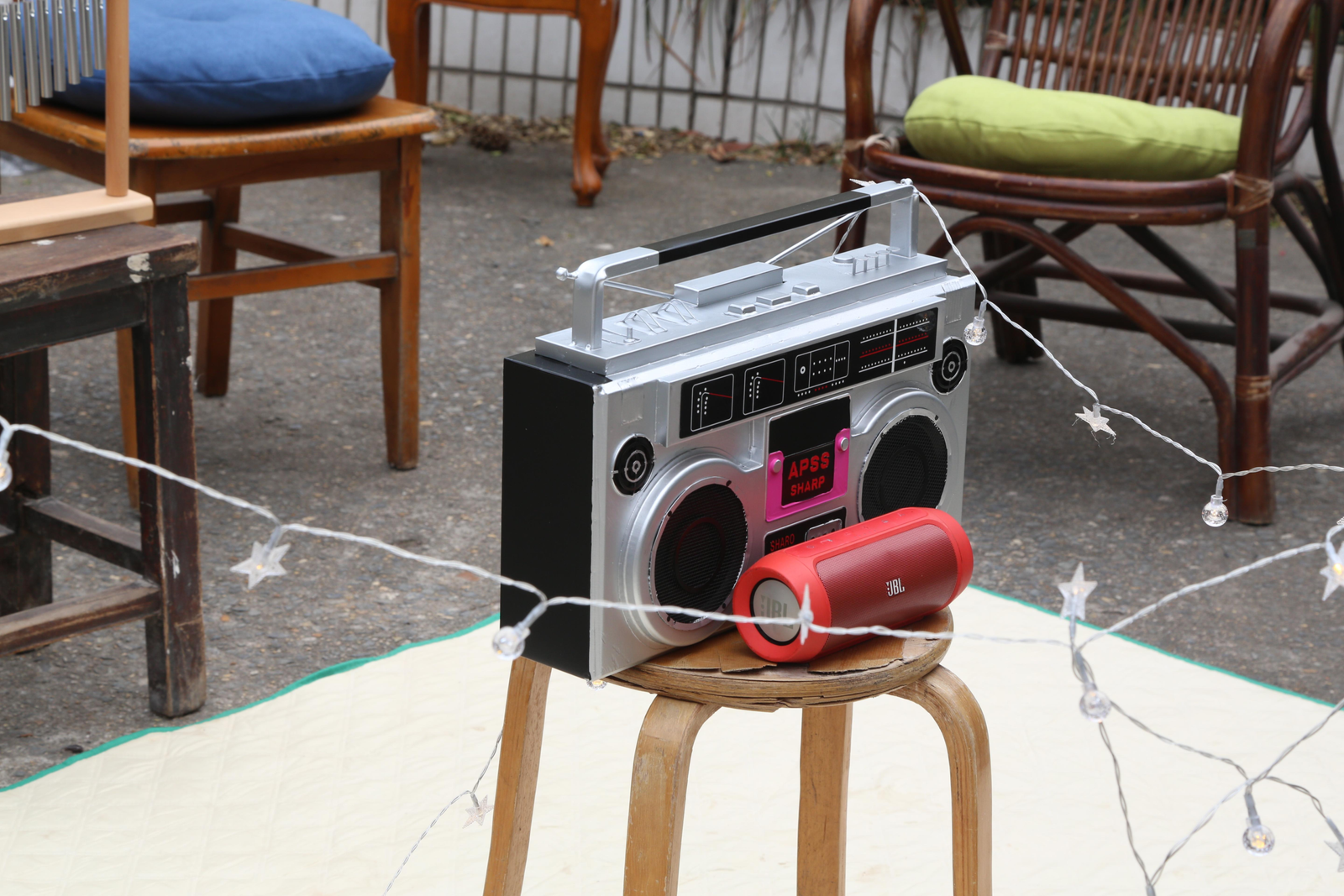
- Familiarity & Safety: Use vintage objects (radios, small TVs) and a ground-floor venue.
- Replicable: Use low-cost, community-available materials and volunteers.
- Recruit 8 seniors for each session and train 6 volunteers to run weekly sessions.
- Activity format: Weekly 1 to 2 hour reminiscence sessions using old songs and vintage objects.
Action
Step 1: Team & Venue Setup
- Choose to carry out the project on the first floor of the outdoor area. (Near Yangpu District Yinhang Community Sports and Health Center)
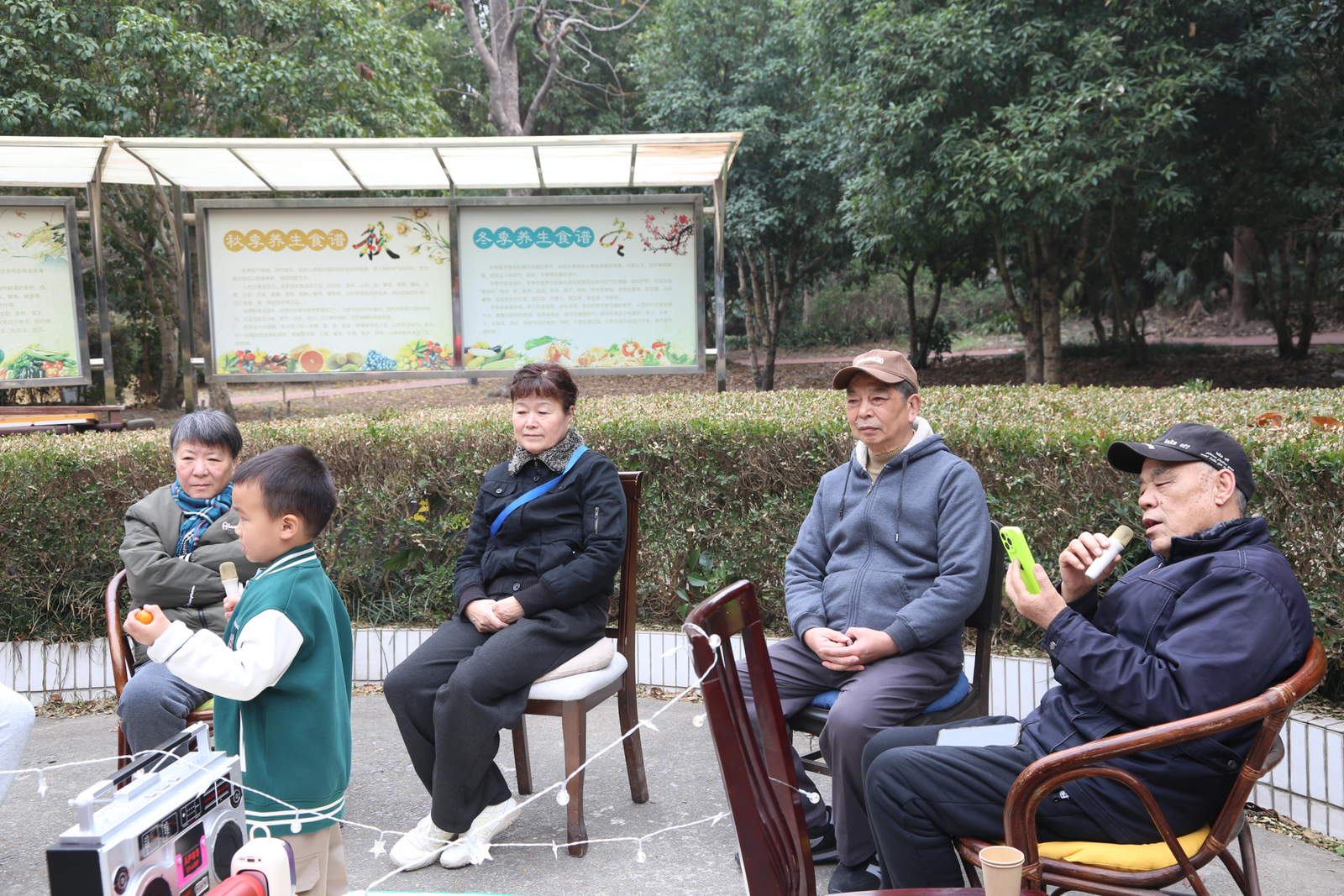
- Arranged circular seating to promote eye contact and equal conversation.
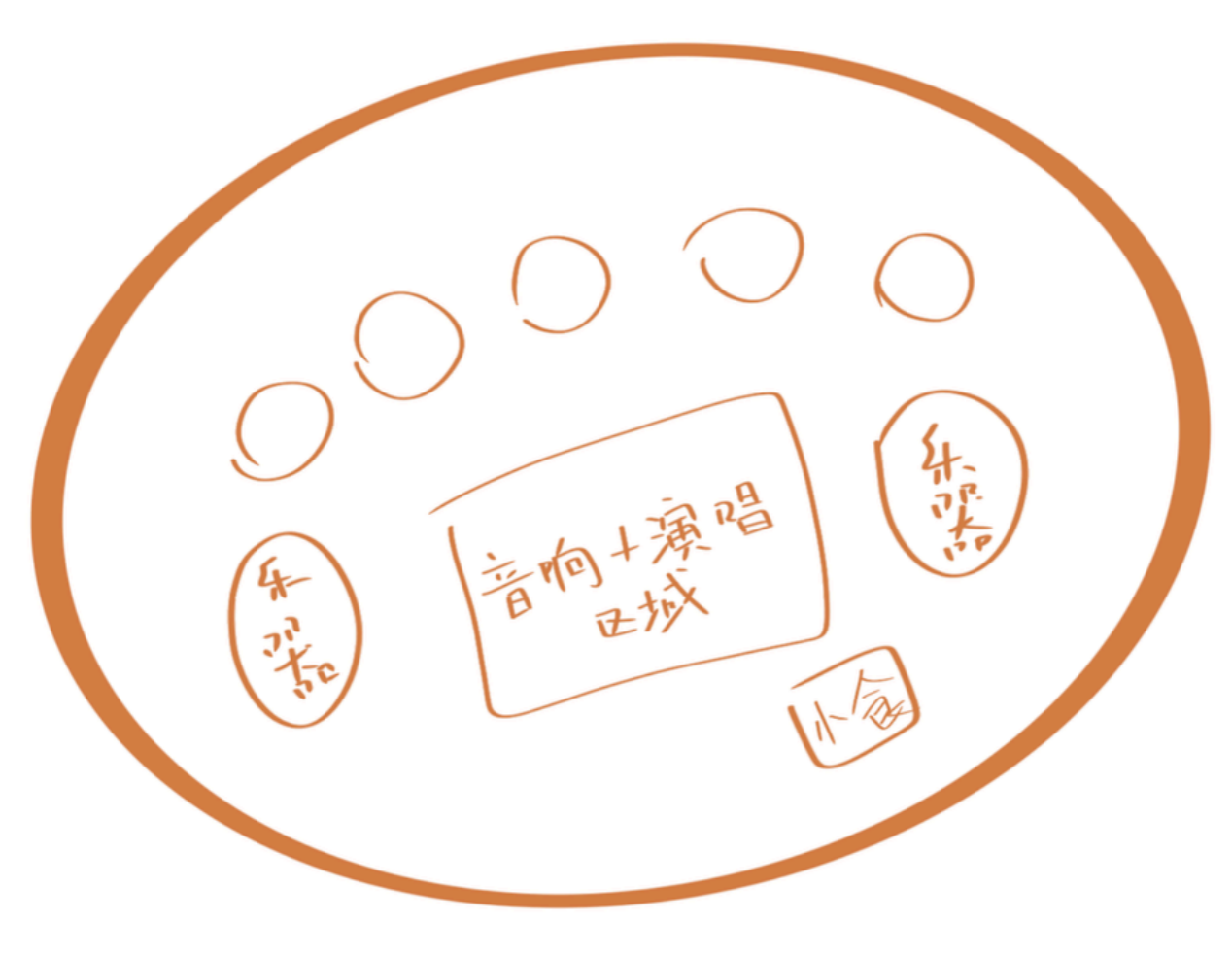
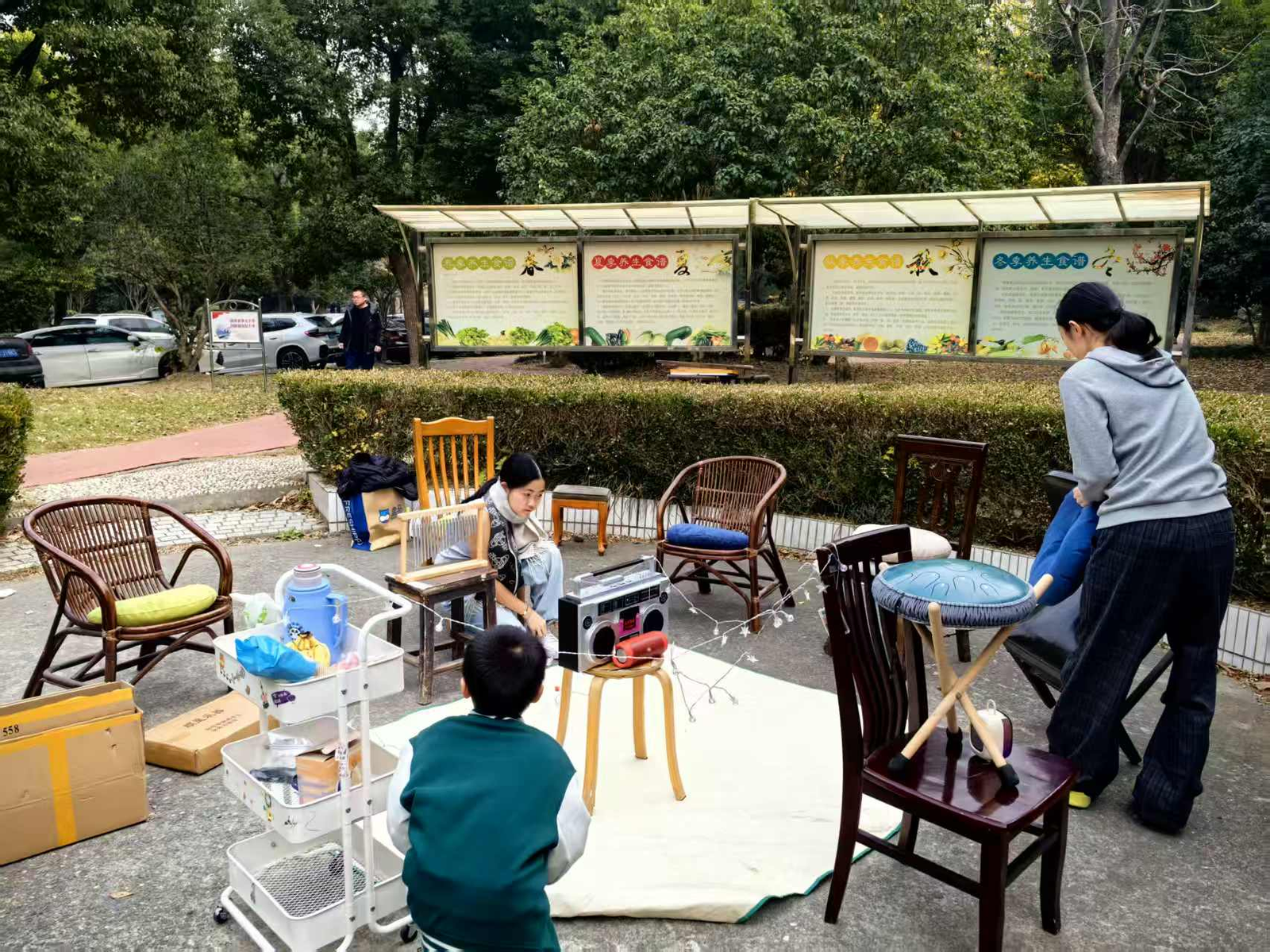
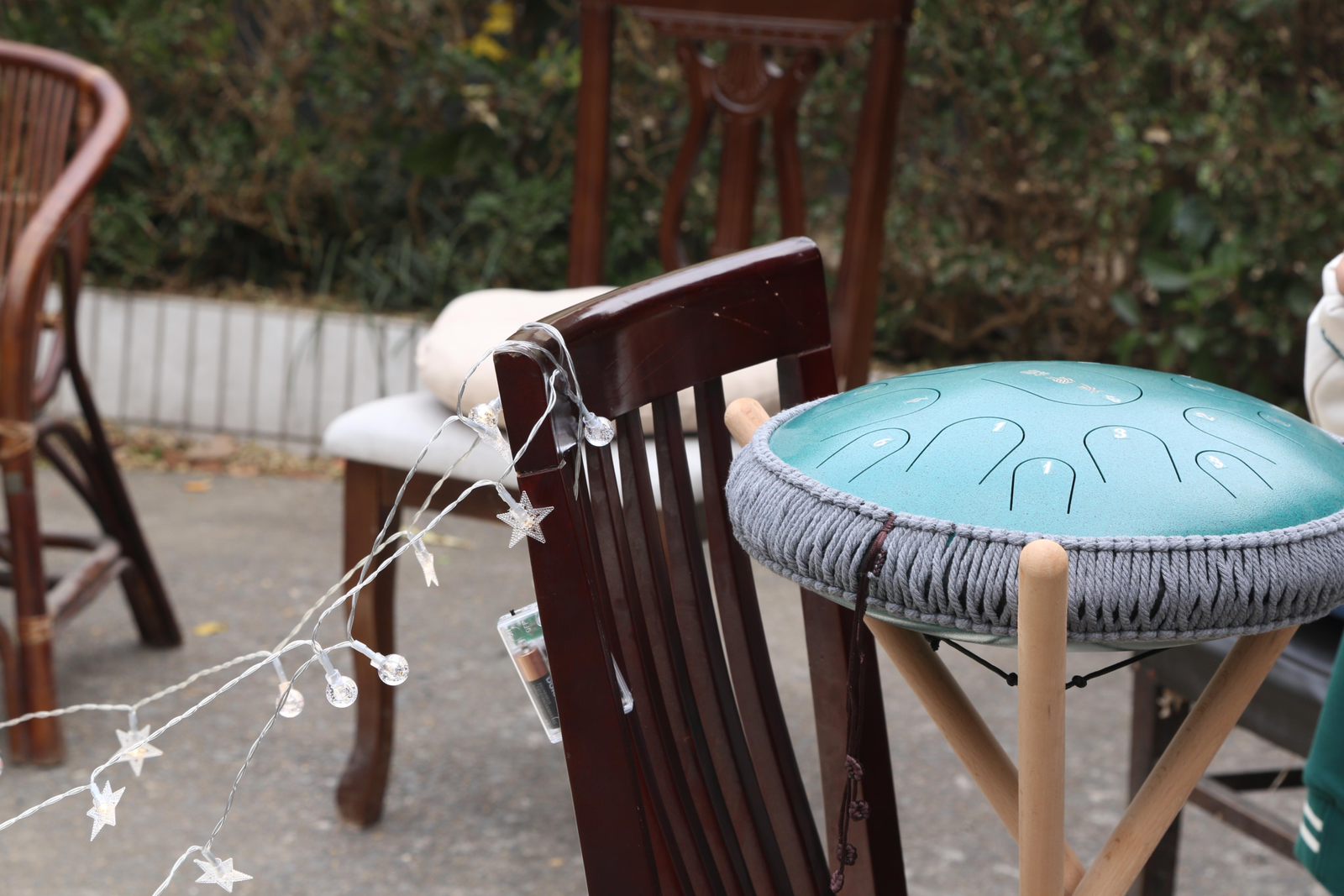
- Decorated with vintage radios, retro ornaments, and soft hanging lights to create a safe, familiar atmosphere.
Step 2: Activity Design (Based on Interview Preferences)
- Schedule: Weekend mornings (9:00–10:30) to match their preferred time slots.
- Playlist: Strictly Peking Opera, Yue Opera, Red Songs, and 80s pop (had an interview with them in advance to create the playlist).
- Materials: Prepared large-print lyric sheets (font > 28pt) , soft cushions, and small percussion instruments (wind chimes, steel drums).
Step 3: Weekly Session Flow
- Opening: Introduction to the day’s theme.
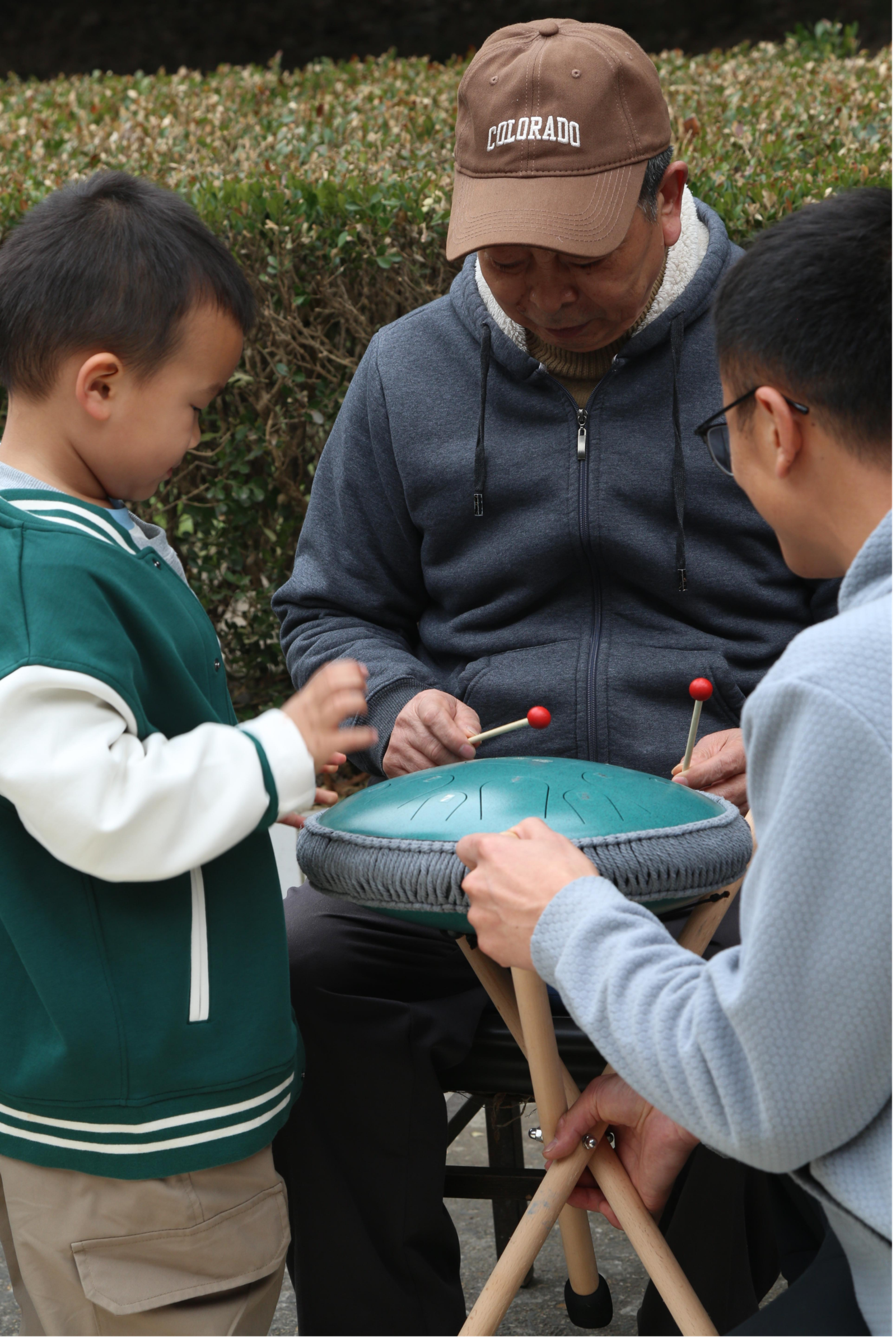
- Instrument Experience: Light interaction with chimes/drums to lower defenses.
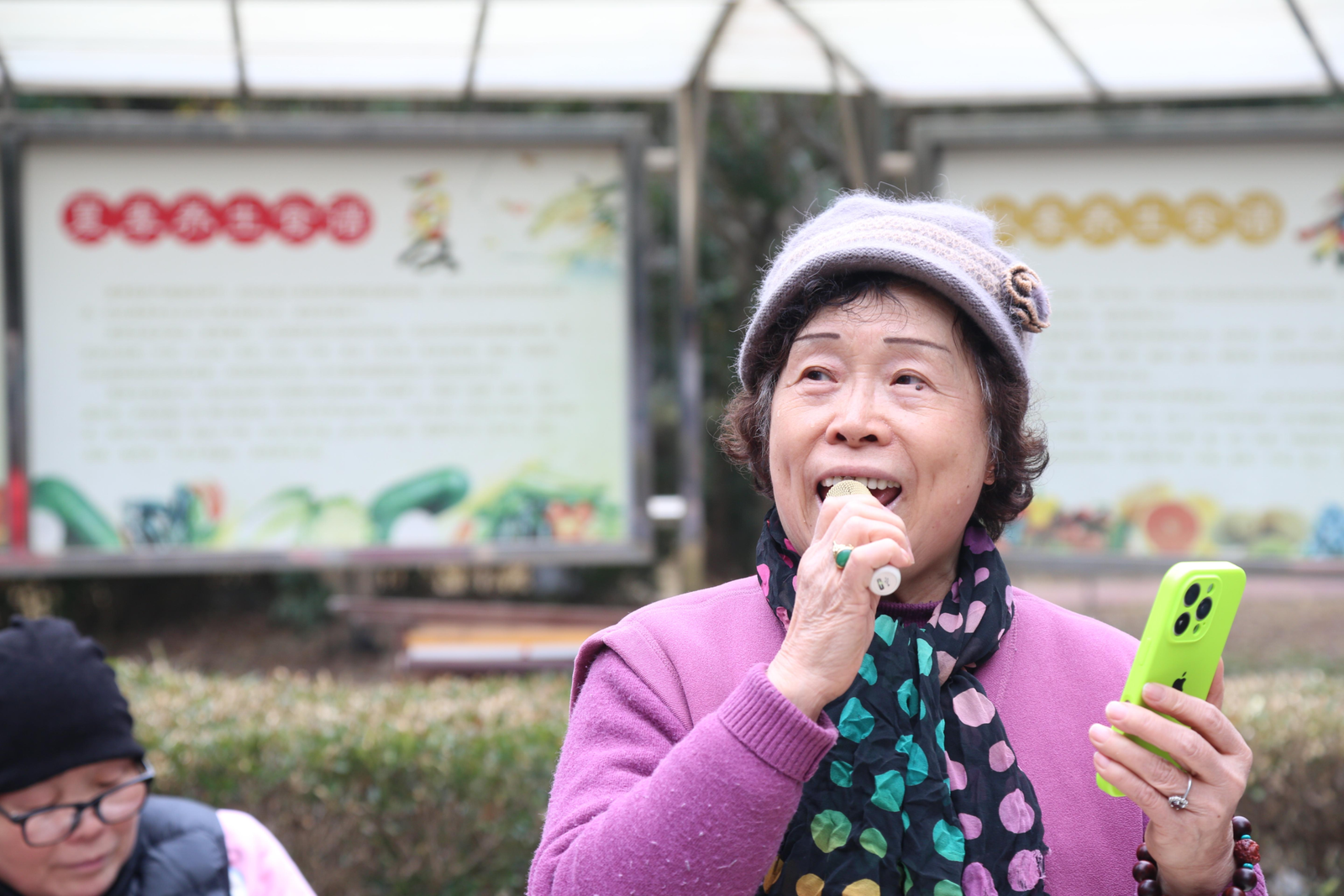
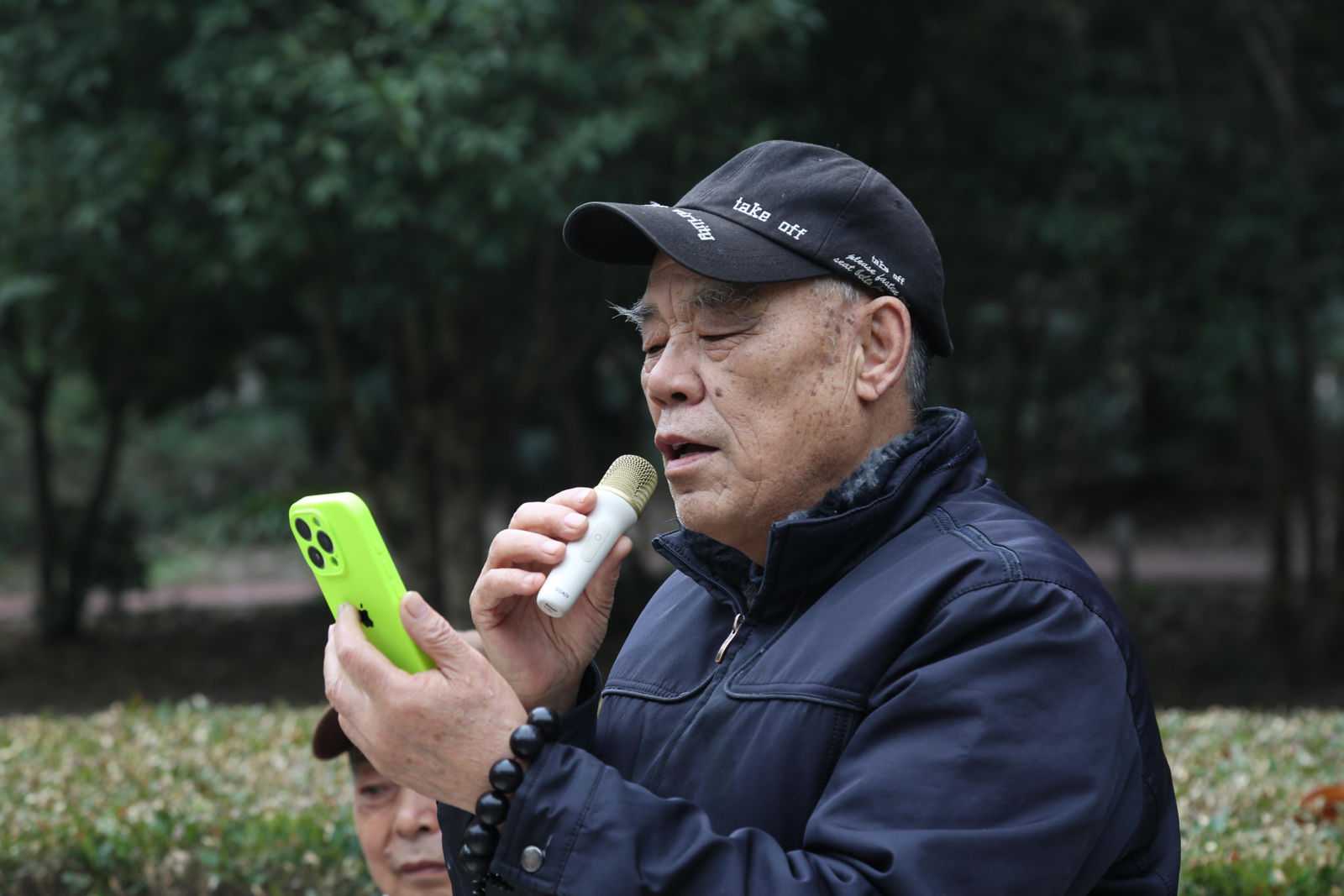
- Singing: Seniors volunteer to sing in front of the group, while others can chat freely and eat some snacks provided.
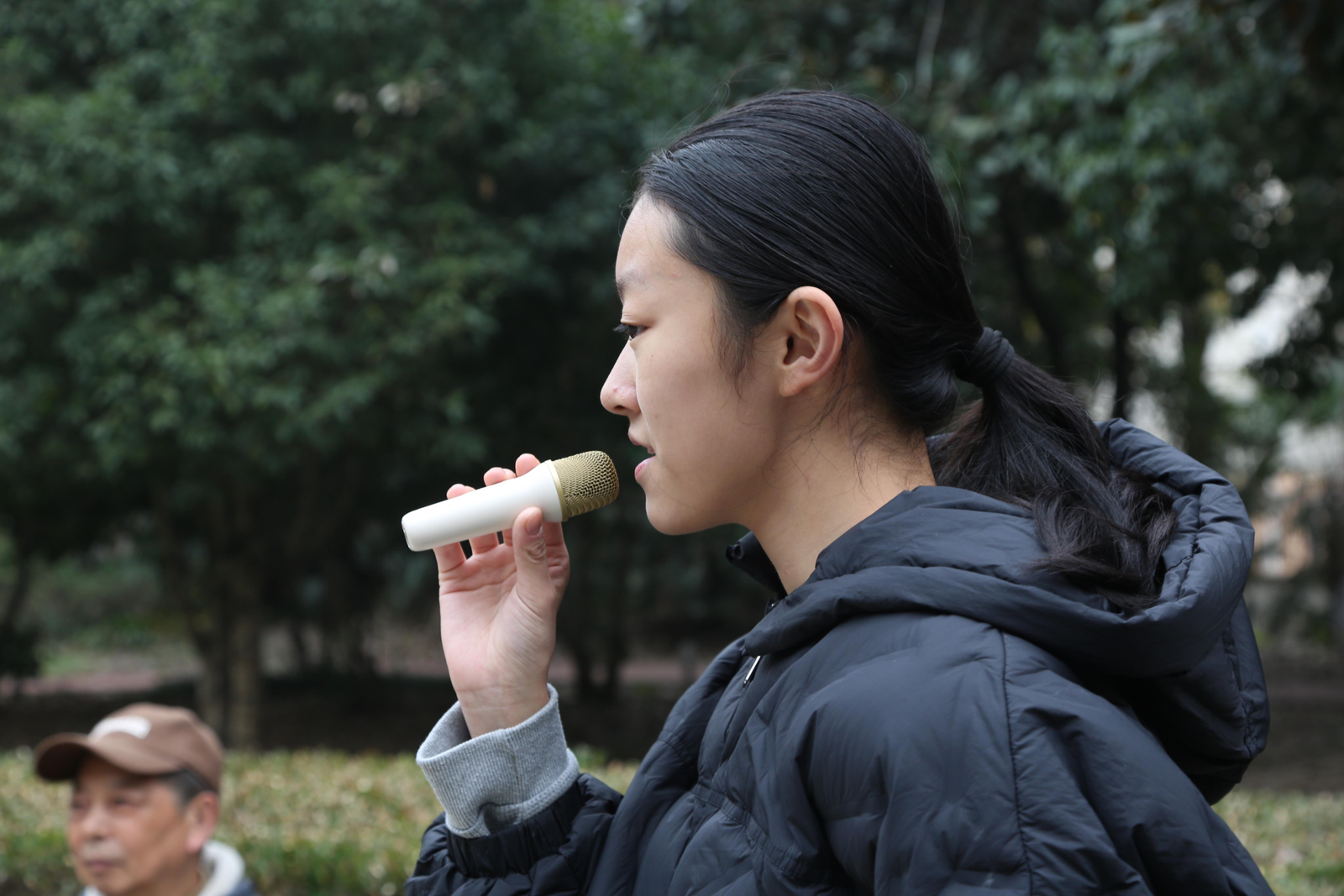
- Volunteer Performance: To warm up the atmosphereand to promote intergenerational communication
Step 4: Data Collection during Prototype
- Qualitative: Volunteers recorded immediate interviews and extracted high-frequency keywords (“comfortable,” “happy,” “thoughtful,” “those days”).
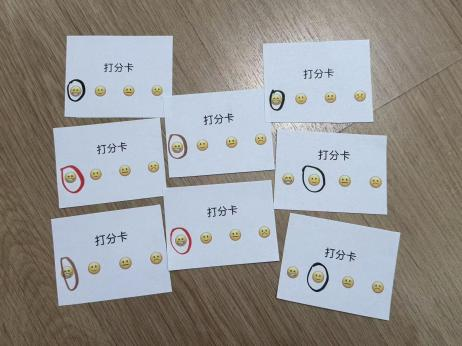
- Quantitative: Used a “Smiley Face Card” (Very Happy / Happy / Neutral) instead of text scales to accommodate low literacy and poor eyesight.
Result
Quantitative Results (N=8 regular attendees)
- Positive Emotion Rate: 100% (all chose “Happy” or “Very Happy”).
- High-Intensity Positive Emotion: 75% chose “Very Happy.”
- Critical Finding: All 3 lonely/isolated seniors (living alone) chose “Very Happy”, indicating this model has special value for socially isolated groups.
Qualitative Feedback (Direct Quotes)
- “Hearing the old songs reminds me of my younger days” — Emotional awakening.
- “Chatting with old pals while listening to music makes me feel so comfortable inside” — Social connection.
- “The egg rolls and cakes are exactly what we like” — Small details made them feel cared for.
- High-frequency keywords: “舒坦” (comfortable), “开心” (happy), “当年” (those days), “贴心” (thoughtful).
Identified Optimizations (Lessons Learned)
- Lyrics Issue: Seniors said, “If only we could see the lyrics, I can’t remember them, and the phone font is too small.”
- Fix: Prepare A3 large-print lyric sheets next time.
- Volume Issue: “Turn the music up, I’m hard of hearing and can’t hear others talking.”
- Fix: Introduce assistive listening devices (wireless headphones) for individual hearing differences.